| BOOKS FOR FREE
DOWNLOAD: (printed copies of MCCD books can be purchased from Amazon) |
|
|
Perdigão, Breno O.
(2026) Além
dos Rejeitos: A Mineração e a Relação de
Grandes Empreendimentos de Engenharia com as
Comunidades Locais. Melbourne, Melbourne
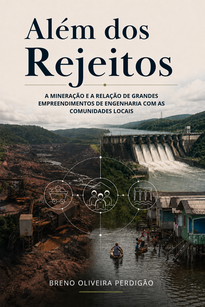
Centre for Community Development. O rompimento de barragens em Mariana e Brumadinho revelou não apenas falhas técnicas, mas também os limites de uma forma de pensar que reduz problemas complexos a soluções de engenharia. Foi a partir dessa inquietação que nasceu a pesquisa que deu origem a este livro. Mais do que uma discussão sobre mineração ou hidrelétricas, esta obra é um convite para repensar a própria ideia de desenvolvimento. Em vez de partir das necessidades dos empreendimentos e de seus imperativos técnicos, ela propõe olhar para a realidade concreta das comunidades locais e perguntar de que forma a tecnologia, a economia e as instituições afetam sua autonomia, seus vínculos sociais e suas possibilidades de florescimento. |
 |
| Perdigão, Breno O.
(2025) Sostenibilidad
Comunitaria: Aplicación del
Pensamiento Sistémico Multimodal en un Barrio de
Brasil: Tesis
Doctoral. Melbourne, Melbourne Centre for
Community Development.
Este libro examina la sostenibilidad comunitaria en Santa Terezinha, Belo Horizonte. A partir del Pensamiento Sistémico Multimodal (PSMM), analiza cómo el llamado “progreso” y la visión neoliberal debilitan el tejido social, afectando la autonomía local y la cohesión comunitaria. Como respuesta, propone una intervención educativa enraizada en la vida local, orientada a fortalecer la ética social, la familia y el trabajo vocacional. Más que una crítica, esta obra es una invitación a la acción, convencida de que la renovación social comienza en los barrios donde la vida comunitaria aún resiste. |
 |
| de Raadt, J. D. R.
(2023) Pensamiento
Sistémico Multimodal:
Una Gramática de La Ciencia. Melbourne,
Melbourne Centre for
Community Development.
El tema de este libro es el pensamiento. El autor presenta una forma de pensar que combina la erudición humanista cristiana de Erasmo, la filosofía social y las bellas artes de la República Holandesa del siglo XVII, y los avances más recientes en teoría modal, ciencia de sistemas y sociocibernética. Su objetivo es enseñar a sus alumnos a pensar de manera humana y aplicar una ciencia para servir a su comunidad y vivir con integridad. |
 |
| de Raadt, J. D. R.
(2023) Multimodal
Systems Thinking: A Grammar
of Science. Melbourne, Melbourne Centre for
Community Development. The theme of this book is thought. The author presents a way of thinking that combines the Christian humanist scholarship of Erasmus, the social philosophy and fine arts of the 17th century Dutch Republic, and the more recent advances in modal theory, systems science and sociocybernetics. His endeavour is to teach his students to think in a humane manner and apply a science – by which they themselves can live with integrity – to serve their people. |
 |
| Casiello, Francisco
et al
(2010) La Problemática
Contemporánea del
Agro Argentino: Una Perspectiva Multimodal.
Rosario, Universidad
Católica Argentina. El presente trabajo confronta una de las grandes dificultades que ha atravesado la sociedad en los tiempos presentes: el problema contemporáneo del agro. Se trata de una situación que ha involucrado a los sectores más diversos de la sociedad y ha expuesto la necesidad de poder abordar, con una metodología adecuada, problemas que se caracterizan por su complejidad, entendida como la presencia de aspectos variados de la problemática, sobre los cuales las ciencias específicas pueden proveer apenas una visión parcial, y el carácter plural de los problemas, que hace que sobre una misma situación se presenten visiones diferentes, incluso contrapuestas. Con relación a la variedad disciplinar el trabajo ilustra cómo es posible pensar la relación entre las diversas disciplinas para tratar de reconstruir una lectura coherente de una realidad social. En lo que hace a su pluralidad, el trabajo muestra cómo es posible despejar el origen de estas visiones plurales y mantener los puntos de vista, a los efectos de poder arribar a propuestas de trabajo que mantengan la armonía en la diversidad de enfoques. Esta perspectiva para el abordaje de los problemas sociales se encuentra dentro del ámbito de la investigación-acción y puede considerarse el primer libro en español sobre el denominado pensamiento multimodal. |
 |
| de Raadt, J. D. R.
(Ed. Veronica D. de
Raadt) (2019) A
Historical and
Sociological Defence of the Christian Family.
Melbourne, Melbourne
Centre for
Community Development. This book is divided in two parts. The first part is a historiological study of the decline of the family during the modern era. It explores the epistemological origins of this decline brought about by two opposite forces, instrumental rationality and subjectivism. The second part explores the parallels between the biblical view of the family and sociocybernetic principles based on the functioning of the brain. It argues that humanity can only function normally when the family is both the building block of society and its overall model. |
 |
| de
Raadt,
J. D. R. (Ed. Veronica D. de
Raadt) (2017) The
Rise of Bureaucracy and the Decline of Work
– their Roots in the 2nd and 3rd Century
Church. Melbourne,
Melbourne Centre for
Community Development. At the beginning of the 2nd century A.D. the leadership of the church was passed on to the Early Fathers who began adapting the Gospel to their own Hellenic culture. Over a period of just one and a half centuries, they converted the communities founded by the apostles into a bureaucracy and their work into worship. They also imported theology from neo-platonism and relegated the natural sciences and the humanities – both essential for work – to secularism. From then on, Christianity became equally ineffective to combat the barbarism of Rome, mediaevalism and now modernity.
|
 |
| de
Raadt, J. D. R. (2015) Information and Managerial
Wisdom (Second
Edition). Melbourne, Melbourne
Centre for Community Development. This book examines concepts of informatics – such as dis-information, noise and uncertainty generated by global interconnectivity – that explain the destabilising effect of information technology on society. These concepts are derived from cybernetics and are pedagogically presented to provide students an understanding of the social and cultural context of information. This should help them apply information technology in subservience to human endeavours rather than the contemporary practise of the reverse. ...de Raadt has produced a highly readable text which enjoins us to modify the approach that we use to solve our world problems. He should be commended for his effort: it follows in the tradition of famous predecessors such as Stafford Beer and Geoffrey Vickers who have trodden similar territory. John P.
van Gigch, California State
University, Sacramento, USA
|
 |
| de Raadt, J. D. R. and de Raadt,
Veronica D. (2014) From
Multi-Modal
Systems Thinking to Community Development:
Regaining our Humanity
through Community. Melbourne, Melbourne
Centre for Community
Development. This book is an edited collection of papers – written by the authors over a period of twenty years – that describes the transition from a system approach to thinking to educational programmes focused on community development. Multi-modal systems thinking integrates the humanities to inspire people to live fully, socially and ethically. The book covers both theory and practical application and gives an account of the authors' design of university programmes and their work in community based projects and research. It has been put together to serve as a text in community development, social analysis and methods courses. But it should be of interest to all professionals including educators, social workers and community practitioners concerned with the crisis in our communities and who wish to add a social and ethical dimension to their practice ...a very well polished book...a remarkable summary of the historical thinking... developed over the years and a good collection of some of the best theory in multi-modal systems thinking. Luciana
Romano
Morilas, University of Sāo Paulo - Ribeirāo
Preto, Brazil
|
 |
| de
Raadt, J. D. R. (2013) Intelligent
Christianity for an Age of
Folly. Melbourne,
Melbourne
Centre for Community Development. This is a book for people, Christians and non-Christians alike, who are disgruntled with the incongruities of post-modernity and who are willing to engage in some serious thinking to understand what is happening to us and what should be done about it. The author argues that, despite our material achievements, modern man has regressed to medieval thinking. He then introduces the historical reasoning of the Bible and the Christian humanists to which we are indebted for much of the scientific and cultural advances of the West. Intelligent Christianity turns out to be a lay Christianity not only because Jesus instituted it this way, but because today's society needs it as much as in his times. Although no quick solution is provided, the author illustrates the practical value of historical reason through an account of his own application to redesigning university education in Australia, USA and Sweden. Offers a very good foundation to a systemic and truly Christian way of thinking that merges scientific approach with practice. There is fresh insights from thinkers like Juan Carlos Vives, Eramus, Melanchton, John Calvin, and De Raadt itself, that helps to understand better the role of a real Christian in a real society including all of it's areas. It's a must read! Christian M.
de Britto, Federal
University of Paraná, Brazil
|
 |
| de Raadt, Veronica
D. (2002) Ethics
and Sustainable Community Development. Parkland,
Florida, Universal Publishers. Sustainable communities depend on ethical people. This book explains how multi-modal systems thinking can be applied to ethical and normative issues of community life. It also provides a practical way forward by using the methodology and SmCube software for social systems analysis and design. These are presented in an extensive case study of life in Rosvik, a village in northern Sweden, where a group of villagers struggle to sustain their village against the loss of people and economic resources to large industrial centres of the south. The book examines the predicament which villagers are struggling with and provides a design of activities to revitalise the village, challenge its leadership and retain the next generation. Ethics and Sustainable Community Design will be of interest to managers, community activists, social workers and anyone interested in a new scientific tool that preserves the humanity of community life against mechanisation and an industrialised world view. |
 |
| de
Raadt, J. D. R. (2000) Redesign
and
Management of Communities in Crisis. Parkland,
Universal Publishers. The author presents a method to identify the primary factors that are threatening communities, to collect information about such factors, organise it and analyse it. More importantly, leaders can develop models to examine how factors interact with each other to sustain or to threaten the viability of a community. These models can also be used to redesign and manage the community and ensure its long-term viability. Although solidly based on theory, the object of this book is fully practical. The method is illustrated with a real life application to Boden (a town in northern Sweden), furthermore, it incorporates an especially designed computer modelling tool (separately distributed) to assist its application. While the focus is on communities, the method can also be applied to other social systems, such as business organisations, voluntary associations, and government departments. The book should be of interest to managers, project leaders and other community leaders. ...the appeal of the book should be universal. It basically answers two questions: a Why? and a How?...Professor de Raadt shows us, with practical examples, how one can draw on religious convictions to achieve great things for humanity by realigning community life along normative lines using his excellent methodology. Do not just read this valuable and inspiring book; put it to practice! György
Járos,
University of Sydney, Australia
A powerful message, - insightful and inspiring! De Raadt addresses the nexus between what we believe and what we achieve. He presents a diagnosis of the crisis of community, but he also outlines a path to weathering it. This book is a must for any responsible leader. Markus Schwaninger,
University of St.
Gallen, Switzerland
|
 |
| de Raadt, J. D. R. (2001) A Method
and Software for
Designing Viable Social Systems. Parkland,
Universal Publishers.
(Software
included in zip file) This companion book to Redesign and Management of Communities in Crisis explains step-by-step a method to identify the primary factors threatening communities, to collect information about such factors, organise it, analyse it and design counteractions. It also includes hands-on tutorial exercises. The presentation is fully integrated with SmCube, a software package developed to analyse and design social systems. The integration has two benefits. Firstly, SmCube assists the systems designer apply the method. Secondly, SmCube is also a learning tool: it helps new users understand the multi-modal systems method and methodology. Used together, the two books and software provide excellent analytical and design tools for managers, community leaders and corporate planners. They may also be used as class material for courses in social systems design. SmCube was developed with support from the Swedish Defence Forces and has been applied in community project evaluations associated with the European Commission. |
 |
| de Raadt, J. D. R. (1998) A New Management of Life.
Toronto Series in
Theology (Vol.
75). Lampeter, Wales, Edwin Mellen. This volume introduces a new approach to science that seeks to understand life and its management in a prophetic manner. This approach regards the soul and the mind as indivisible parts of humanity. There cannot be an educated mind without an educated soul. It proposes a new model for management to sustain and develop work, arts, families, government, industries. ...exposure to the ideas found in this book will greatly benefit tomorrow's managers and leaders as they prepare themselves for the challenge they will face. R.
G. Goodhew, Anglican Archbishop of Sydney,
Australia
...a courageous, original, and timely contribution to a forgotten and most important ethical perspective on systems science and management. Kristo
Ivanov, Umeå University, Sweden
I have found de Raadt's work to offer profound scholarly insight into many of the problems we face today in the management of the Information Revolution and its impact on society. He provides a uniquely Christian perspective on systems science, and suggests application to wise living and management, of the individual and the enterprise. Douglas
Grant, Swinburne University of
Technology, Melbourne, Australia
|
 |